Monero and its cypherpunk vision keep on living despite bans

Unlike Bitcoin and other cryptocurrencies, Monero cannot be traced, making this currency very dangerous for states. In the European Union and in many countries it is already banned. Bitcoin, on the other hand, has been accepted by financial institutions and even states like El Salvador.

But it wasn't always like this... Bitcoin was the cryptocurrency of the darknet drug market Silk Road, when it was harder to associate a real identity with a Bitcoin address. Bitcoin could previously be easily used to send small transactions; today this is more complicated, as it requires the use of second-layer systems such as the Lightning Network to avoid very high commissions.

Digital gold and digital silver

Today more people use Bitcoin as digital gold rather than as regular currency, since no one wants to spend something that can increase in value. Monero also rises in value compared to the euro and other fiat currencies, but it's more like digital silver, because it has a higher issuance rate than Bitcoin.

Bitcoin for Wall Street, and Monero for the black markets?

Due to its privacy features, Monero is widely used in illegal markets on the dark web, although it's also used by many tech enthusiasts who are simply seeking privacy. There are numerous businesses that accept Monero and websites where ordinary people offer products and services, such as XMRBazaar. Bitcoin is also accepted in all sorts of businesses, but many prefer to use cryptocurrencies such as Litecoin, Dash or Bitcoin Cash, as they do not require the use of second-layer technologies

Bitcoin is also accepted in all types of businesses, but many prefer to use cryptocurrencies such as Litecoin, Dash or Bitcoin Cash, since they don't require second-layer technologies such as the Lightning Network.

Despite bans, Monero's price shows resilience
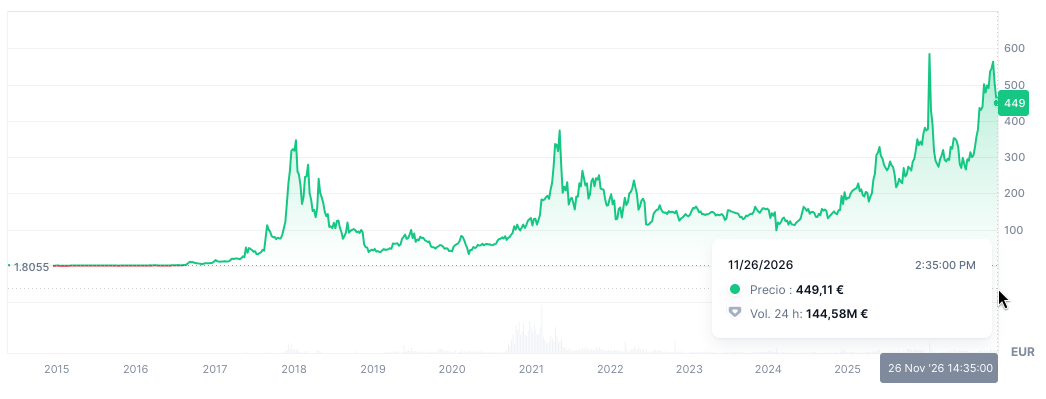
Graph showing the evolution of the price of Monero from its beginnings to 26 November 2026

Instead of being forgotten, as it happened with currencies that were removed from centralized platforms, Monero has endured especially on decentralized platforms. Mining has increased, its price has risen (up to 448,81 euros per coin at the time of publication of this article) and more than 21,000 transactions are carried out each day.

Cryptocurrencies like Monero are uncensorable and it's difficult to make them disappear, no matter how much some countries or influential people try otherwise. There will always be a use case for Monero.

Why can't you use Telegram to chat anonymously

Telegram was launched in 2013 and has since become one of the most widely used messaging apps. Some people use Telegram to communicate with family and friends, while others use it to stay informed in group chats or channels, where one or few people can broadcast content to millions of subscribers.

It allows you to send self-destructing messages, post huge files, create and interact with bots, start end-to-end encrypted voice and video calls, and do most things that you can expect from a messaging app, like sending audio messages, stickers and emojis.

So what's wrong with Telegram? Well, it dangerously gives some people a false sense of privacy that is in no way warranted. This is mainly due to misleading advertising: Telegram claims to be open source and heavily encrypted. Even if these deceptive statements were truth, the popular messaging app has other serious issues that compromise your privacy.

Closed-source, centralized and not encrypted: a privacy nightmare

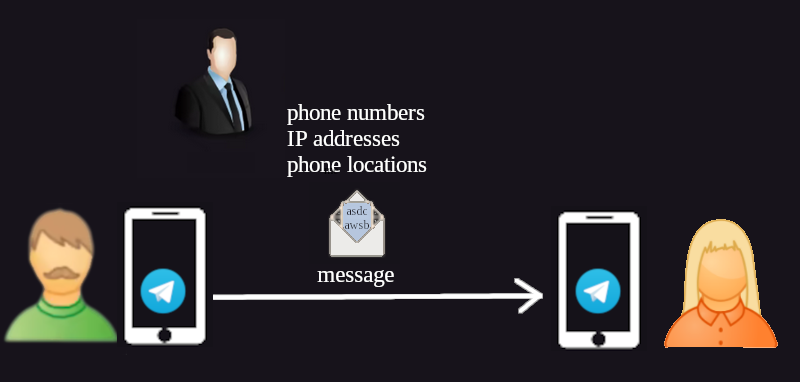
Only the Telegram client code is open source, but that code is useless without the back-end closed-source programs and infrastructure. Those core components are controlled by a single company that can be easily forced to comply with authorities. In August 2024, Telegram CEO was arrested by French authorities who demanded information on users of the app. He gave in, showing the world that your private conversation, phone number, IP address, pictures and so on are not safe.

Telegram's funding depends on paid subscriptions that unlock special features and ads. Who can assure you that in the future they will not expand their revenue streams by offering you ads based on the things you send or training AI?

What prevents Telegram employees, hackers or government agents from reading your messages? Nothing. Messages on Telegram aren't encrypted by default, so users are in the buff. Sure, They could start a "secret chat", which is quite inconvenient, as you have to tap various buttons to access this option and wait for the other user to connect before you can send messages. To add insult to injury, that feature is not available on desktop or web clients and its usage would surely raise suspicion. Optional privacy makes users who opt in stand out in the crowd.

You will be tracked

Forget about being anonymous on Telegram. Before you can even start chatting you have to provide a phone number, which can easily be linked to your real identity. As a solution, you could use a burner phone and use Telegram on your computer, but what if you want to use it on a mobile phone? You would have to be tech-savvy enough to install a privacy-friendly mobile operating system and avoid being tracked by mobile phone networks.

One way to protect your identity is to pay for a remote SMS verification with Monero (SMSpool offers this service) and use Telegram on a free operating system. If you are afraid that Telegram might ask for verification again and you want to keep using the same account, you can buy or long-term rent a mobile number that is not related to your identity.

In short, using Telegram for privacy or anonymity is overly complicated, so it is not recommended for those purposes. If someone invites you to use Telegram to talk about sensitive topics, avoid entering the lion's den. Instead tell them to do it in person or use an open source, decentralized and anonymous alternative (such as SimpleX, Delta Chat or Briar).

Why cryptocurrencies have value?

Many people have a hard time understanding why cryptocurrencies have value. They think that if they are not backed by a government or something tangible, they cannot be valuable.

Cryptocurrencies have value because users have confidence in them. It is similar with fiat money and gold. If no one believed they had value, they would be worthless. But why do some people have faith in Bitcoin and other cryptocurrencies? Besides having a network that has been running smoothly since 2009, Bitcoin has something that sets it apart from fiat money: it is scarce. There will never be more than 21 million bitcoins.

In contrast, central banks print the money they want in order to manage the economy from above. As more and more money becomes available, it becomes less and less valuable.

That is why, measured in euros or dollars, Bitcoin is becoming more and more valuable. This digital scarcity was created in the Bitcoin protocol to maintain the value of the currency. While it is possible to create another blockchain similar to Bitcoin (as Bitcoin is free software) and thus create more coins, not everyone would adopt the clone currency, as the value lies mainly in the community of users and the trust acquired over the years. There are a multitude of different currencies that try to compete with Bitcoin, but they only have value because they provide some different functionality and have a community behind them.

How can something digital be scarce?

Unlike other digital assets that can be copied and pasted without limit, cryptocurrencies operate in a decentralized manner with a consensus mechanism that guarantees their security and scarcity. This consensus mechanism varies from cryptocurrency to cryptocurrency. The first consensus mechanism used is based on a process known as proof-of-work, in which computers called miners compete to solve mathematical problems to validate transactions.

Since miners receive financial rewards for mining, there is a large network of computers that keep the network decentralized and running 24 hours a day, every day of the week. Proof of work makes it nearly impossible to reverse or modify a transaction once it is part of the blockchain. Since the network is validated by a large number of actors who receive rewards for their contribution and thus have a stake in the proper functioning of the network, it is not economically feasible to amass more than 50% of the network to maliciously alter the blockchain.

Less and less is being issued

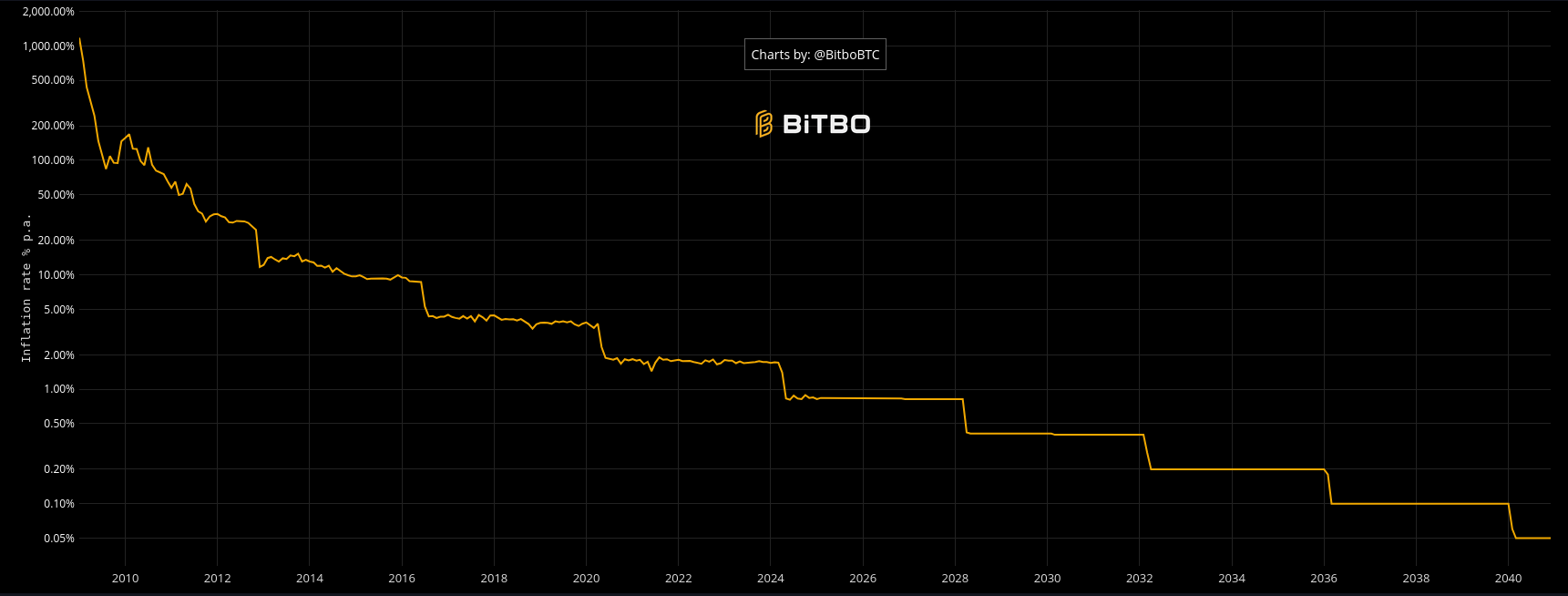
Bitcoin inflation rate from inception to 2040

Every four years, Bitcoin reduces the rewards received by miners by half, so fewer and fewer coins are issued. In the year 2140, Bitcoin inflation will be 0%, that means that no new coins will be issued. Miners will then continue to receive rewards because there are fees they receive for validating transactions. Bitcoin's inflation is currently lower than that of gold, making it one of the most coveted assets and one of the fastest growing in value.

No central entity can control or confiscate your bitcoins

Another appeal that makes Bitcoin valuable is that it cannot be confiscated by bankers or anyone else. Nor can payments be reversed, as in the traditional banking system. If you keep your private key secure, no one can take your wealth.

It enables international trade

Thanks to blockchain technology, it is possible to trade with anyone in the world who has access to the Internet. Cryptocurrencies have gained recognition and users across the globe, increasing their value.

Conclusion

As long as the Internet and people who value and believe in this technology continue to exist, Bitcoin and similar cryptocurrencies will continue to increase in value over the long term, as they are deflationary. People who hoard fiat money, on the other hand, will lose purchasing power over time if central banks continue to issue more money.

Why choose the Tor network to host your website?

The Tor network not only provides privacy, but also reduces costs and makes your website more censorship-resistant. How?

On the Web you need to pay for a domain. That domain can easily be censored by the authorities if they consider you to be doing something illegal or if you are in a country without freedom of speech. In contrast, on the Tor network you do not have to pay for a centralised authority to assign an IP address to your Keep reading Why choose the Tor network to host your website?

Monero can no longer be legally traded in the EU

The cryptocurrency platform Binance already delisted Monero in February. Now it's Kraken's turn, as it will stop offering Monero for EU customers in November. Why is Monero so dangerous?

Monero transfers are not traceable, which poses a problem for an EU that wants to track cryptocurrency transactions in the same way they track traditional money transfers. Kraken has thus been forced to delist Monero for EU customers.

However, in other countries you can still buy Monero legally and there are decentralized platforms and channels where you can buy and sell Monero. One example is Haveno-reto, which runs on Tor to preserve the privacy of participants.

Will the EU also prohibit cryptocurrency platforms from selling and buying Zcash, Dash or Litecoin1? I don't think so, because these coins are not private by default, unlike Monero.


  1. Litecoin's MWEB offers users the option to send confidential transactions. ↩